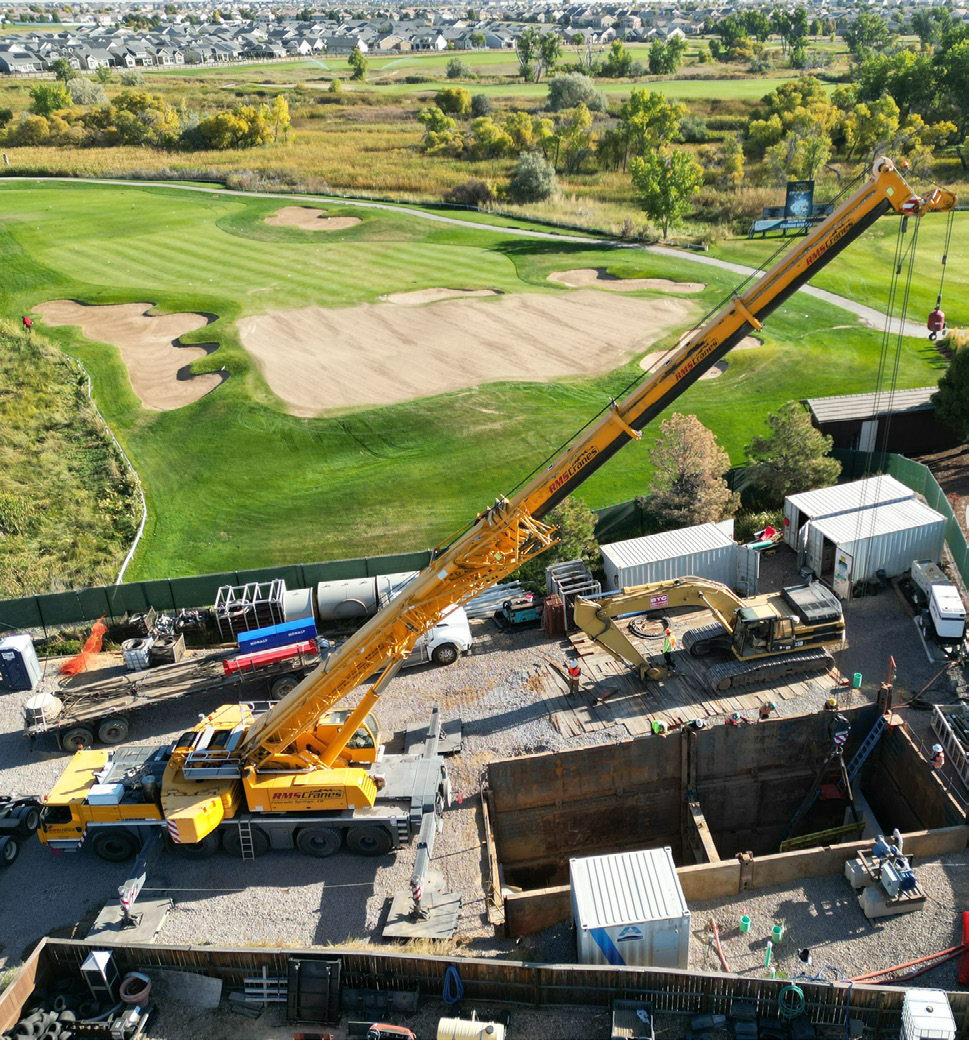




First Creek Interceptor Project

Project Name
First Creek Interceptor Project
General Contractor
BT Construction, Inc. – Henderson, CO
Location
Aurora, CO
Ground Conditions
Highly variable soils including clays, calcium sediment, sand, gravel, and groundwater
Akkerman Equipment
Akkerman Slurry MTB Systems & Guided Boring Systems
Pipe
42-in to 60-in HOBAS and steel casing
Total Length/Hard Rock Section
Six trenchless crossings totaling over 2,500 LF
Owner
Aurora Water

Project Overview

BT Construction completed trenchless installations for the First Creek Interceptor Project in Aurora, Colorado. The project required construction of a major wastewater conveyance system designed to improve long-term infrastructure reliability while reducing reliance on lift stations.

To address varying site conditions and multiple crossing requirements, the contractor deployed a combination of trenchless methods including guided auger boring, microtunneling, guided pipe ramming, and hand tunneling. The integrated approach enabled efficient installation across multiple alignments and challenging subsurface conditions.

Challenges

  • Highly variable ground conditions including clays, sands, gravel, and groundwater
  • Coordinating six separate trenchless crossings within a single project corridor
  • Maintaining alignment accuracy across multiple installation methods
  • Adapting construction approach to differing site and subsurface constraints

Solution

  • Utilized multiple trenchless methods to suit installation requirements
  • Applied multiple trenchless methods, including guided pipe ramming and hand tunneling, to adapt to varying conditions
  • Implemented controlled guidance systems to maintain line and grade accuracy across all crossings
  • Coordinated sequential installations to optimize efficiency and site logistics

Outcome

  • Successfully completed six trenchless crossings totaling over 2,500 LF
  • Maintained accurate line and grade control across multiple installation methods
  • Effectively navigated highly variable ground conditions
  • Reduced reliance on lift stations through improved gravity conveyance design
  • Delivered a resilient wastewater infrastructure solution supporting long-term regional growth