Challenges
The 1800 North Sewer Realignment — Phase 1 project involved replacing aging infrastructure and splitting an existing 60-inch sewer trunk that carries 23 million gallons per day. This required installing multiple 36-inch steel casings shortly beneath dozens of active freight and commuter rail tracks and under a high-priority interstate. Key challenges included:
- Extremely tight alignment tolerances with gravity flow requirements and critical grade control.
- Multiple high-risk subterranean crossings under 12 sets of rail tracks plus a major freeway.
- High groundwater and artesian conditions, requiring careful pit design and dewatering.
- Complex pit excavation and construction in saturated soil, demanding innovative sequencing and control
Innovative Approach
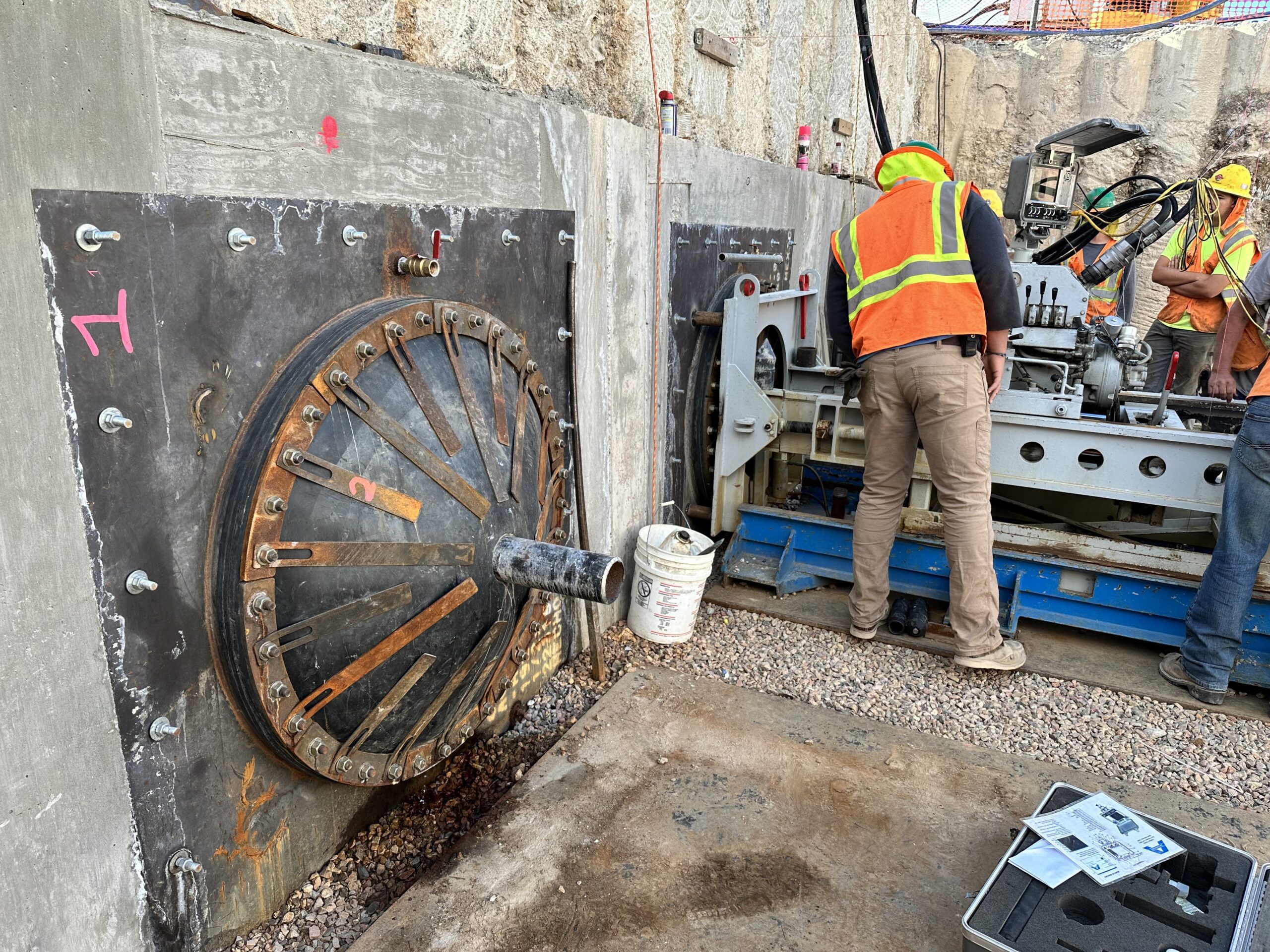
To meet the precision and safety requirements of the project, the team implemented a guided pilot tube + pipe ramming strategy utilizing Akkerman equipment. This combined the line and grade accuracy of pilot tubes with the power and reliability of pneumatic ramming to drive casings on target through challenging geology.
Solution
Pilot Tube Installation
Pilot tubes were accurately pushed from the central pit outward on controlled alignment. Once installed, they were used to establish the path for subsequent casing installations, ensuring highly reliable grade control with minimal deviation — a technique consistent with Akkerman’s pilot tube principles.
Pipe Ramming Execution
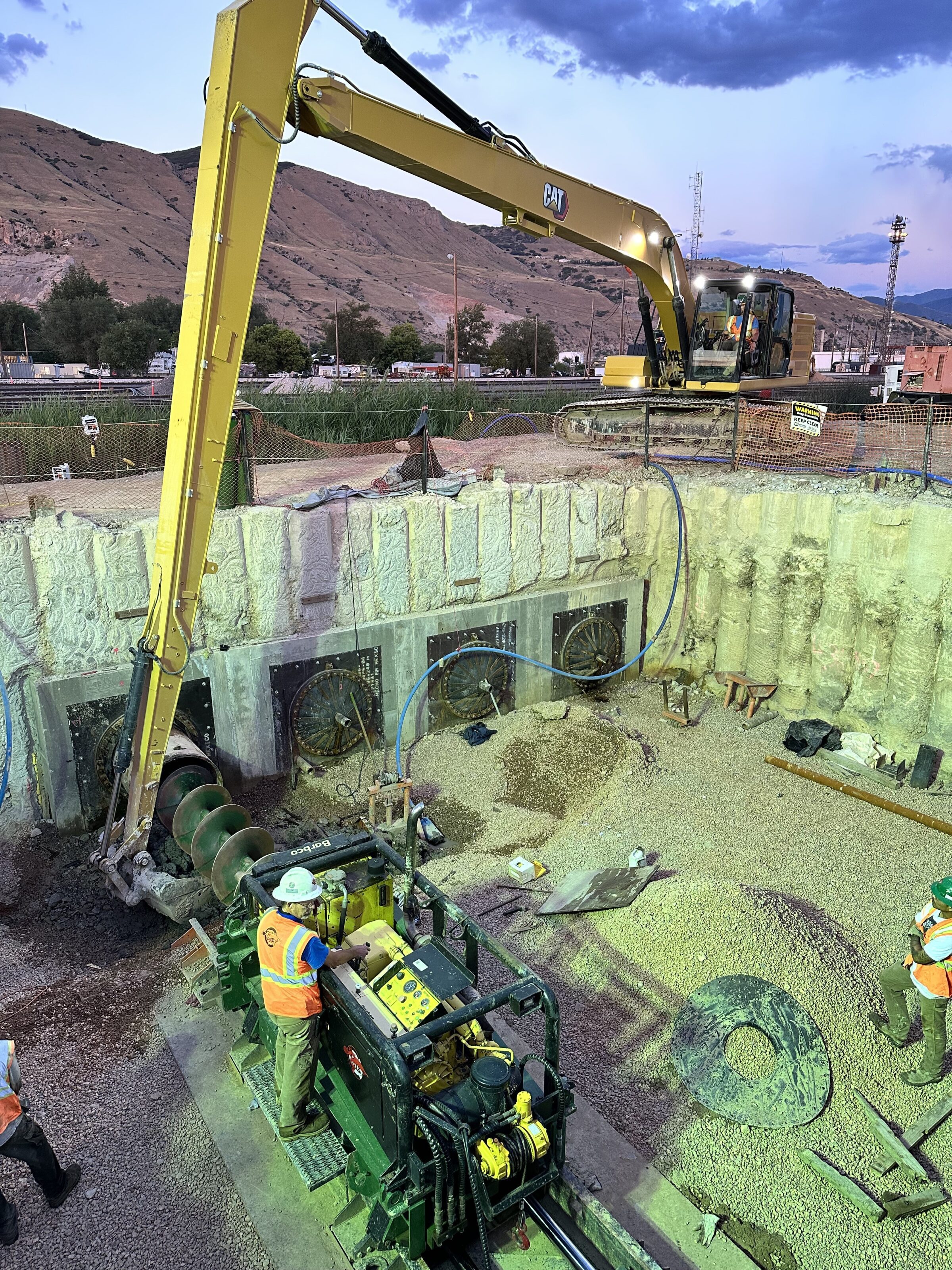
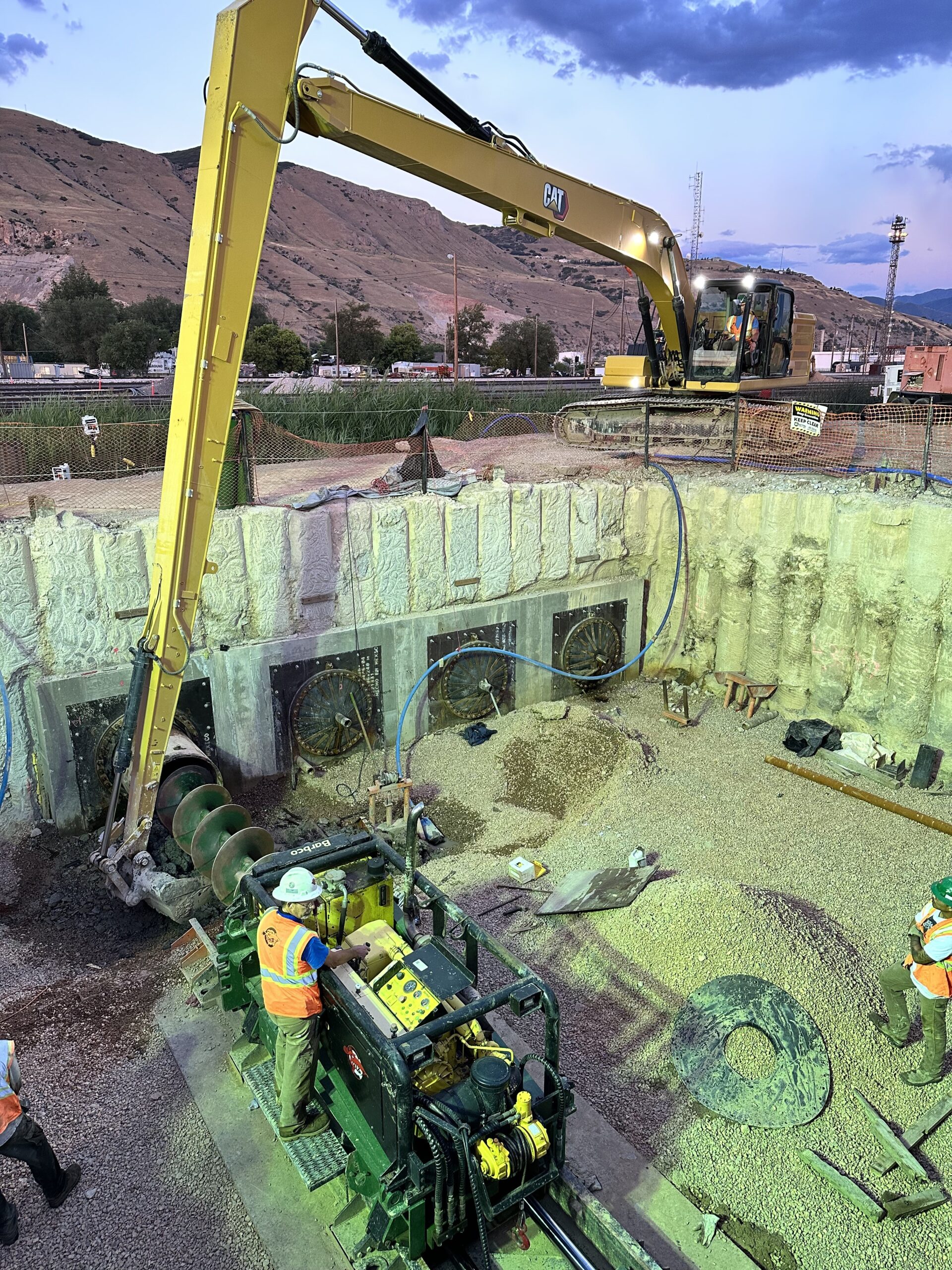
Using a Grundoram Taurus pneumatic pipe rammer, crews rammed the steel casings following the pilot tube path. An adapter connected smaller guide pipes to the larger casing sections, enabling them to be driven precisely into place over 370+ feet while maintaining alignment within specified tolerances.
Pit Construction & Dewatering
The launch pit was built using secant pile shafts and sheet piles. To combat buoyancy and hydrostatic pressures, the project team pumped concrete via tremie tubes and maintained groundwater levels strategically throughout construction. Over 3,000 cubic yards of concrete were placed, and a temporary dewatering system handled more than 1 million gallons per day.
Coordination and Safety
Due to the operational rail yard and interstate above, continuous settlement monitoring and regulatory coordination were essential. A collaborative communication and tracking process with utility engineers, city departments, and stakeholders ensured safe, uninterrupted operations.